

1. Connection Point
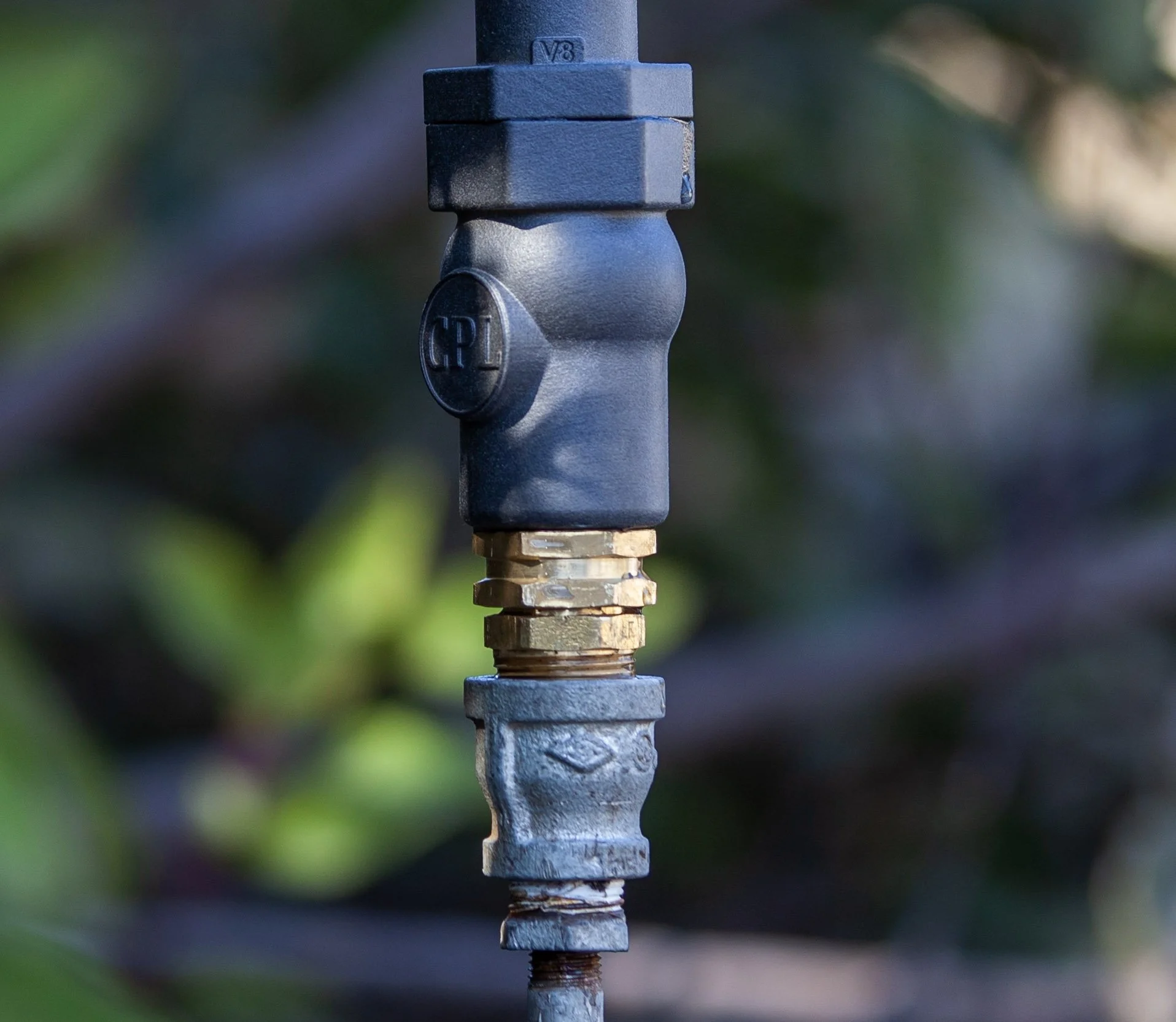
The Thumper is designed to connect at a standard 3/4″ hose bib and is supplied with a brass 3/4″ GHT to NPT coupling for compatibility with common connection points.
For proper operation, the Thumper should only be connected at a free-standing hose bib or backflow preventer that is isolated from interior building plumbing. This ensures the mechanical pulse is introduced directly into the service line without transmitting vibration into the structure or internal piping.
Never attach the Thumper to a hose bib that is connected to active building plumbing. Doing so may reduce signal quality and increase the risk of unintended vibration within the structure.
Ideal operating water pressure is 40–110 PSI, with a maximum allowable pressure of 120 PSI. Always verify system pressure and connection integrity before operation.
2. Vibration
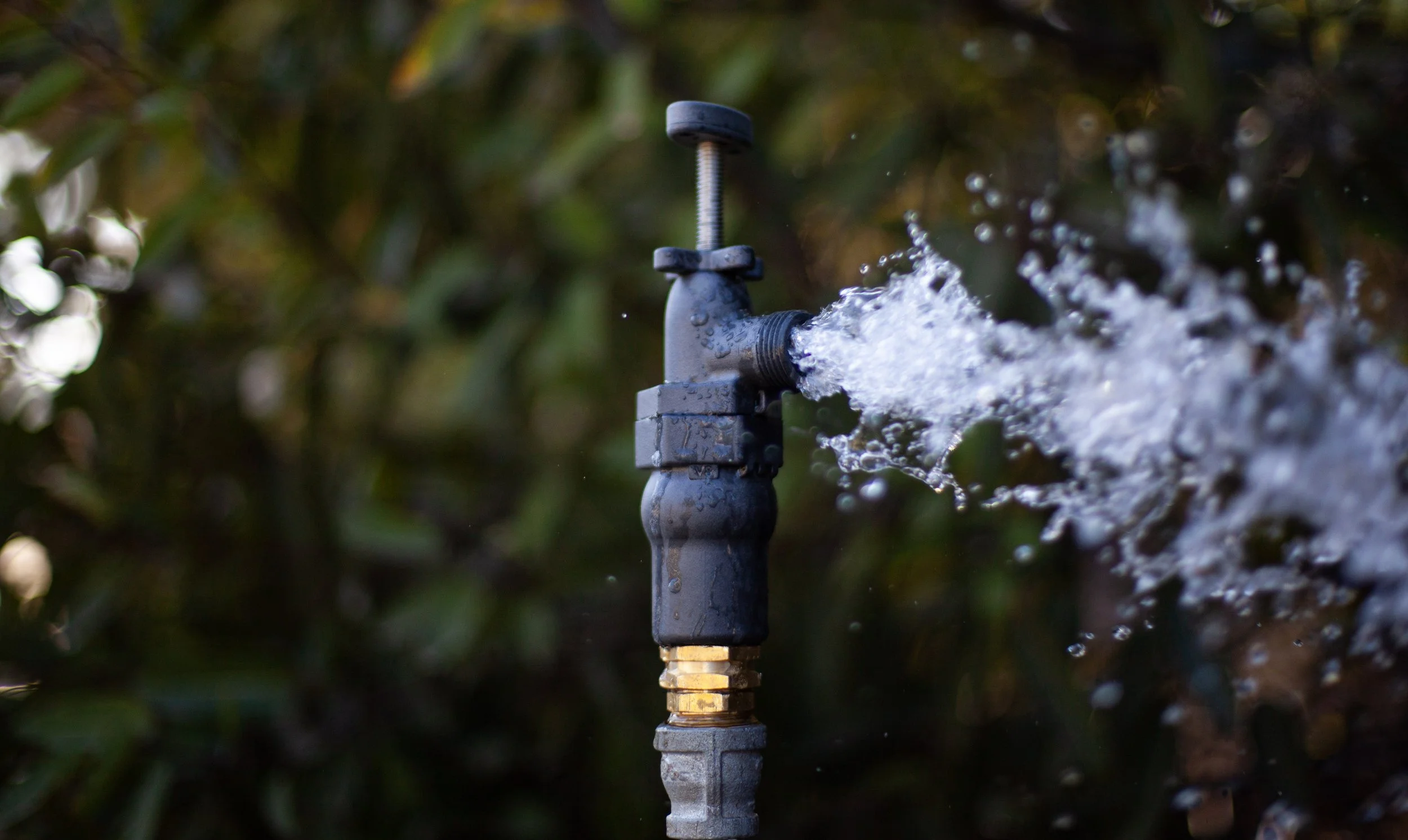
Once activated, the Thumper generates a controlled mechanical pulse that is transmitted into the water-filled pipe. This pulse travels through the water, carrying vibration along the length of the pipe rather than relying on electrical conductivity or tracer wire.
Because the signal is carried by the water itself, it can propagate through PVC and other non-metallic piping materials that are otherwise difficult to trace using conventional locating methods. The consistency and strength of the vibration are influenced by factors such as pipe diameter, fittings, system pressure, and soil conditions.
This process creates a repeatable and traceable signal that can be followed from the surface using appropriate detection equipment.
3. Signal Detected at the Surface
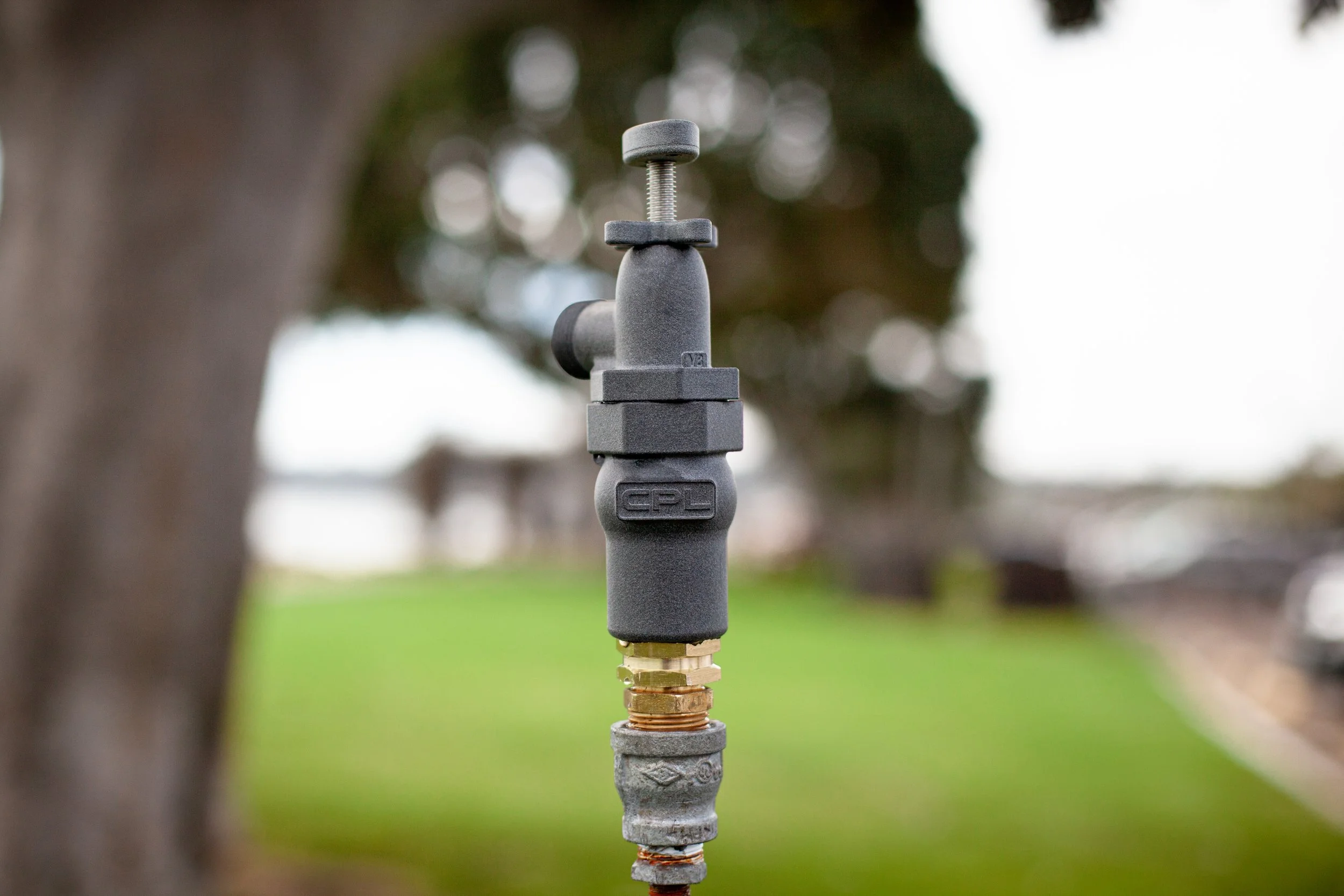
As the vibration travels through the pipe, it transfers energy into the surrounding soil, where it can be detected at the surface using acoustic listening devices. These devices allow the operator to identify changes in signal intensity and trace the approximate path of the underground pipe.
Several acoustic listening tools are currently available on the market and may be used to detect the Thumper’s signal. CPL Technologies is also in the process of developing a dedicated acoustic listening device engineered specifically to pair with the Thumper, with a focus on clarity, consistency, and field usability.
Signal strength and detectability will vary based on soil composition, depth, pipe material, fittings, and environmental conditions. Proper technique and experience remain critical to accurate interpretation.